Who invented the QR code? Masahiro Hara and DENSO WAVE
The QR code was developed by Masahiro Hara’s team at DENSO WAVE and announced in 1994. Here is why it was made, how it was designed and why it is free to use.
Add LearnQRCode as a preferred source on Google
Quick answer
- Engineer Masahiro Hara led a two-person team at DENSO WAVE, then a division of Japan's DENSO CORPORATION.
- DENSO WAVE announced the QR code in 1994 for car-parts factories that needed more data and faster reading than a barcode.
- DENSO WAVE declared it would not exercise its patents, so anyone can use QR codes free.
At a glance
- 1Masahiro Hara at DENSO WAVEA team of two
- 2Built for car-parts factoriesMore data, faster reading
- 3Announced in 1994
- 4Free to use, ISO standard 2000
In this guide
The QR code was built for a Japanese car-parts factory floor by a team of two. Here’s the short history, from the inventor company’s own accounts.
Who invented the QR code?
It was developed at DENSO WAVE, then a division of the automotive supplier DENSO CORPORATION. Engineer Masahiro Hara, who had worked on barcode scanners and optical character recognition, led the project with one other person. DENSO WAVE announced the QR code in 1994.
Why was it needed?
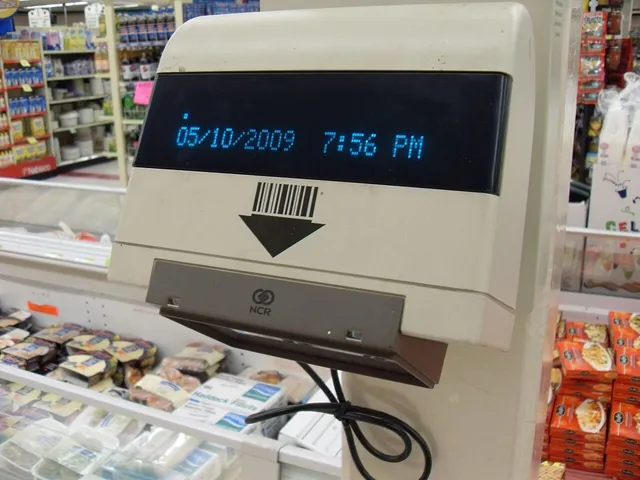
A barcode holds only around 20 alphanumeric characters. DENSO WAVE says factories printed several barcodes side by side, and workers could scan roughly 1,000 barcodes a day.
In 1992, manufacturing sites asked Hara for faster reading. Users also wanted to store Japanese kanji and kana. More data and faster reading became the brief.
How the design came together
Other 2D code makers focused on capacity; Hara’s team focused on speed, adding a distinctive marker that tells a scanner where the code is.
The team studied dark-to-light ratios in flyers, magazines and cardboard boxes, looking for the pattern least likely to appear by accident: 1:1:3:1:1. That became the three corner squares. Because a scanner finds the ratio from any direction, the code reads at any angle. See how QR codes work.
After about a year and a half, the code could encode about 7,000 digits, handle kanji and, according to DENSO WAVE, be read more than ten times faster than other codes of the time. QR stands for quick response (more in what is a QR code).
Why the QR code is free to use
DENSO WAVE published the specification and, while keeping its patent rights, declared it would not exercise them. The company says the developers wanted the code used as widely as possible.
Its FAQ says no application, licence or fee is needed, including for commercial use, as long as codes follow the JIS or ISO standard. It does hold the trademark on the words “QR Code”.
Timeline
| Year | Milestone |
|---|---|
| 1992 | Manufacturing sites ask Masahiro Hara for a faster, higher-capacity code |
| 1994 | DENSO WAVE announces the QR code |
| 1997 | Approved as an AIM International standard (October) |
| 1998 | Approved as a JEIDA standard (March) |
| 1999 | Approved as a Japanese Industrial Standard, JIS X 0510 (January) |
| 2000 | Approved as international standard ISO/IEC 18004 (June) |
| 2002 | Use becomes widespread among the public in Japan, helped by QR-reading phones |
| 2004 | Micro QR Code approved as a JIS standard (November) |
| 2011 | Approved by GS1 as a standard for mobile phones (December) |
The ISO standard has been revised several times; the current edition is ISO/IEC 18004:2024.
From factories to everyday life
Car makers used QR codes first, in electronic kanban systems tracking parts from production to shipping. Food, pharmaceutical and contact lens companies followed for traceability.
DENSO WAVE says public use took off in Japan in 2002, driven by phones that could read QR codes. Today they’re used worldwide for tickets, boarding passes and payments, which has also attracted scammers.
Common misconceptions
- “Invented for smartphones.” They predate smartphones by over a decade; phones adopted them later.
- “A recent invention.” Announced in 1994; menus and payments just made them visible.
- “You need a licence.” No licence or fee for codes that follow the JIS or ISO standard.
- “QR stands for Quick Response Code.” The letters mean quick response, but the official name is “QR Code”.
Other codes from the same family
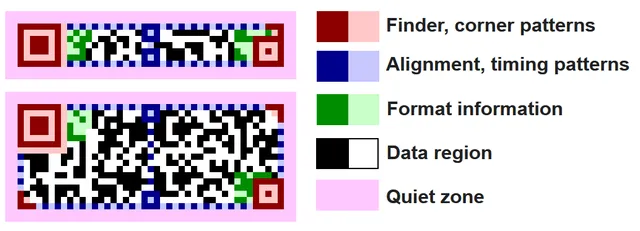
DENSO WAVE also developed the Micro QR Code for small spaces, the iQR Code (2008) with rectangular layouts, and Frame QR (2014) with space for an image. The standard square QR code remains the one your phone reads.
Key points
- Inventor: Masahiro Hara and a colleague at DENSO WAVE, then part of DENSO CORPORATION.
- Announced: 1994, for automotive manufacturing.
- Big idea: fast reading, thanks to the 1:1:3:1:1 corner squares.
- Free to use: patents held but not exercised for standard codes.
- International standard since 2000 as ISO/IEC 18004.
Frequently asked questions
- Who invented the QR code?
- Masahiro Hara led the development at DENSO WAVE, then a division of DENSO CORPORATION, working with one other team member. The company announced the QR code in 1994.
- When were QR codes invented?
- Development began in the early 1990s. DENSO WAVE says Hara was approached by manufacturing sites in 1992, the code took about a year and a half of work, and it was announced in 1994.
- Why were QR codes invented?
- Factories were using several barcodes at once because each held only about 20 characters, which made scanning slow. The QR code was designed to hold much more data, including Japanese characters, and to be read quickly.
- Does anyone own the QR code?
- DENSO WAVE holds patents and the “QR Code” trademark, but it has declared that it will not exercise the patents for codes that follow the standard. No licence or fee is needed to create or use QR codes.